Building with focus: What we learned from the Google for Startups Accelerator

TL;DR: LandLogic joined the Google for Startups Accelerator to turn a land-use intelligence vision into a focused, usable product. With Google’s mentorship, the team launched Parcella: conversational AI for property feasibility and permitting. Now, Parcella is becoming part of One Ontario’s province-wide AI permitting platform, helping move from startup product to infrastructure for permitting modernization.
Only 10% of startups succeed.
It is a blunt statistic, but anyone building a company understands why it feels true: startups rarely fail because the original idea was too small. More often, they fail because the opportunity is too wide, the focus is too blurry, or the product never becomes urgent enough for customers to change how they work.
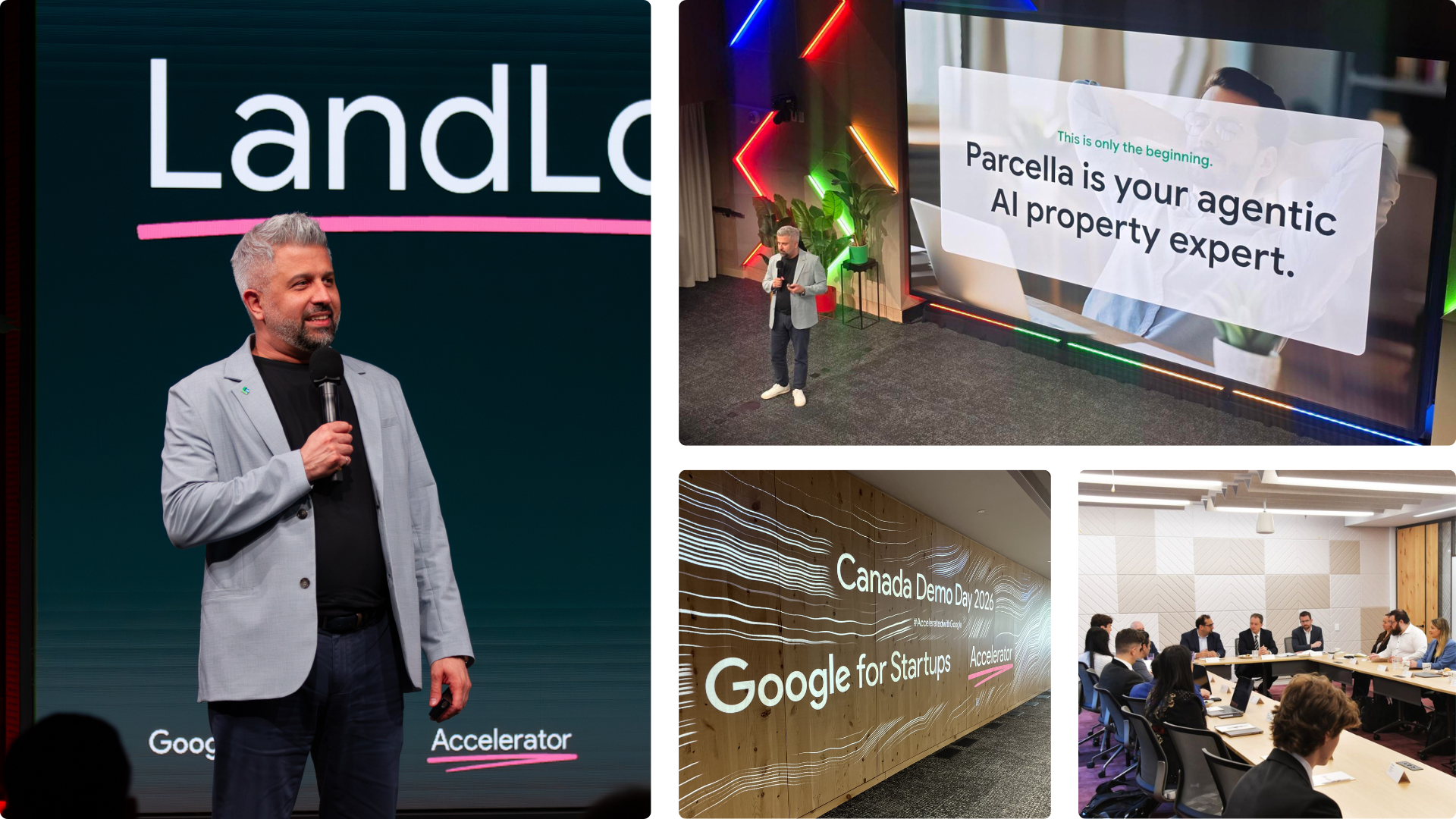
We entered the 2026 Google for Startups Accelerator: Canada cohort with that reality in mind. LandLogic was selected as one of 14 AI-driven startups from across Canada, and we were looking for the kind of guidance that could help us sharpen our focus, pressure-test our direction, and turn our vision into something people could use immediately.
When we entered the accelerator, our vision was ambitious: make land-use information easier to access and act on. With the guidance of the program, we focused that vision on one urgent Ontario pain point: feasibility and permitting.
That focus mattered, because the answers that determine whether a project can move forward are often scattered across municipal websites, zoning bylaws, planning documents, GIS maps, application guides, policy updates, and technical rules. In the middle of a housing crisis, that fragmentation has real consequences: unclear rules, delayed answers, and misunderstood constraints can stall projects that might otherwise add homes, create gentle density, or help owners make better use of existing land.
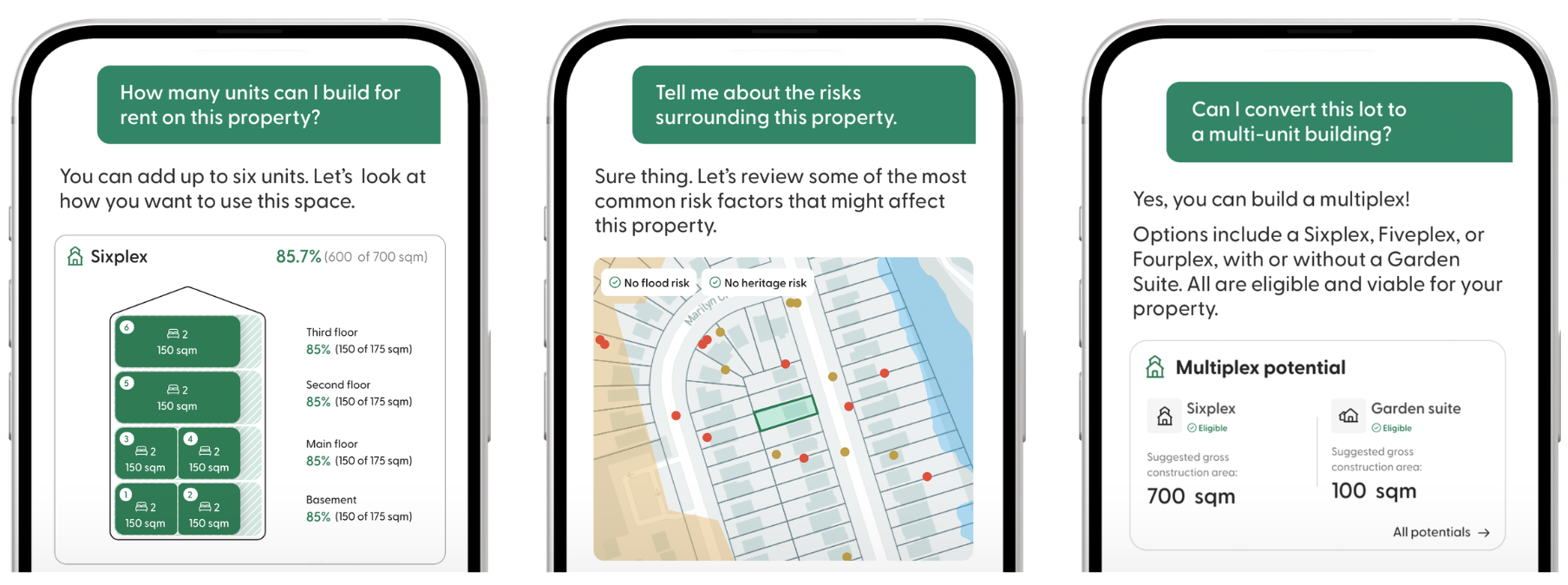
As we worked through the program, we understood that the solution could not be another one-off portal or set of digitized documents. Owners do not want to “read the zoning bylaw.” They want to ask, in plain language: Can I add another unit? Sever a lot? Redevelop this property? What approvals do I need? How do I avoid spending thousands of dollars and months going back and forth with a municipality?
That is why conversational AI became central to the product. If the source material is dense, technical, and fragmented, the interface has to be simple. Users should be able to ask questions in everyday language and get clear, structured answers about feasibility, project optimization, potential red flags, and likely permit requirements.
By the end of the program, we launched Parcella to do exactly that: help people understand what they can do with their property and request a permit, all in one interface.
Arash Shahi, CEO and Founder of LandLogic, said: “We entered the accelerator with an ambitious vision, and Google’s mentors helped us turn that vision into a focused product. We kept coming back to the same pain point: owners need a clearer way to understand feasibility and get approvals. That became Parcella — a conversational AI experience that turns understanding your property and applying for a permit into one connected journey.”
Why Google for Startups Accelerator stood out
This accelerator stood out because it was not a passive experience.
Daily workshops, technical sessions, founder training, product conversations, and events challenged our assumptions and forced us to make pointed decisions. We had to show up prepared, absorb feedback quickly, and turn that feedback into product progress.
The most valuable part was the depth of access. The program gave us ongoing conversations with senior Google experts around the real decisions we were facing: how to structure AI workflows, design for reliability, build trust, and make complex land-use information usable for non-experts.
Soroosh Sanjarani, Product Manager at LandLogic, said: “What stood out most was how hands-on the mentorship was. We had one-on-one sessions with Google experts who were able to look at what we were building, ask the right questions, and give feedback that was both practical and deeply informed. In the startup world, that kind of access is extremely rare. And with their ongoing support, we have experienced advisors in our corner for years to come.”
The program went beyond technical mentorship, with support across product, marketing, founder development, commercialization, and go-to-market strategy. That combination is key because a useful AI product cannot just work in a demo. It has to earn trust, fit real workflows, and give users confidence in decisions that carry real cost.
More than a program
One of the things we appreciated most was how much the Google team advocated for the cohort. This did not feel like a checkbox innovation program. It felt like a serious effort to support Canadian technology startups with mentorship, resources, and continued relationships beyond the formal accelerator.
Iran Karimian, who leads the program, captured our experience this way: “The LandLogic team stood out throughout the Google for Startups Accelerator program for their focus, technical depth, and drive. They came into the program with an ambitious product vision and used the experience to sharpen their strategy, accelerate development, and make meaningful progress on the product. Their ability to absorb technical feedback, move quickly, and execute with clarity was impressive.”
We are maintaining a strong relationship with the Google team, and Google is sponsoring us as we work toward becoming a vendor in Google Cloud Marketplace. For a startup moving from product development into market adoption, that kind of support matters. It creates credibility, opens distribution paths, and helps turn early momentum into something more durable.
Where this goes next
The story doesn’t end there. The need for permitting intelligence is only becoming more urgent. Property owners are being asked to navigate an increasingly tangled web of permitting tools and workflows across hundreds of municipal systems and processes in Ontario.
That is why Parcella has become part of a much larger vision. One Ontario recently announced LandLogic as its first official technology partner for a province-wide AI-enabled permitting platform designed to modernize development approvals across Ontario. Parcella’s feasibility and permitting capabilities are being integrated into the platform and will grow to help people identify requirements, check compliance, complete submissions, and track workflows.
In other words, the work we sharpened during Google for Startups Accelerator is not just a standalone product. It has become an essential piece of a broader permitting modernization effort.
The accelerator helped us identify the right pain point, the right product format, and the right technical direction. We entered with an ambitious idea and left with a working product that can help people today, while supporting a province-wide need tomorrow.